

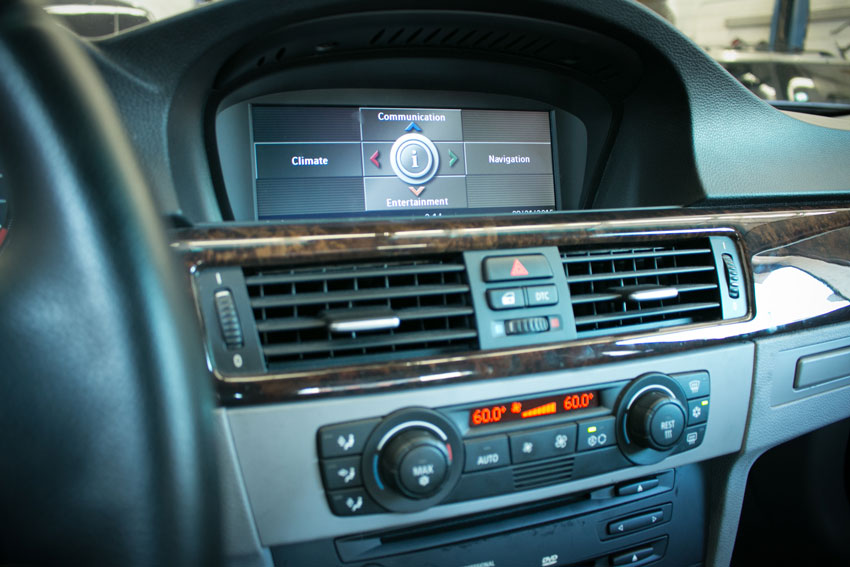
Introduction: why do some BMWs have Bluetooth phone but not music?
Many BMW owners discover a paradoxical situation: their vehicle allows calls to be made via Bluetooth, but refuses any music streaming from a smartphone. This limitation is neither a bug nor a configuration error. It's the result of technical choices and electronic architectures specific to BMW's multimedia system generations.
Between the mid-2000s and early 2010s, BMW gradually integrated Bluetooth into its vehicles. However, the initial implementation focused exclusively on telephony. The Bluetooth profile used was HFP (Hands-Free Profile), intended for voice calls. Audio streaming, based on a different protocol (A2DP), was not systematically enabled, or even hardware-supported.
To understand why some BMWs feature Bluetooth phone but not music streaming, we need to take an in-depth look at the electronic architecture of the CCC, CIC, Combox and NBT systems, as well as the role of the MOST network, the MULF module and the different generations of iDrive.
BMW multimedia systems architecture
The CCC (Car Communication Computer) system
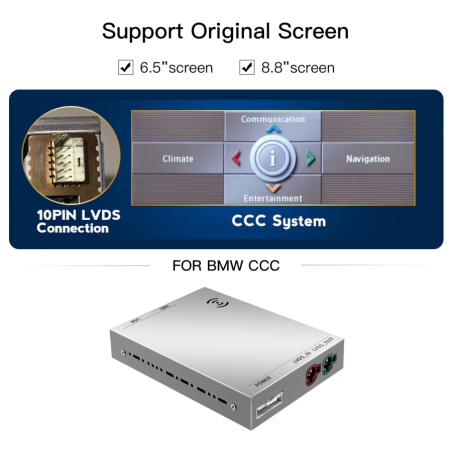
The CCC (Car Communication Computer) mainly equips BMWs produced between 2003 and 2008. It can be found on the 5 Series E60/E61, 3 Series E90/E91/E92/E93 (phase 1), 6 Series E63/E64 and some 7 Series E65.
Technically, the CCC is a central unit integrating navigation, radio, audio management and iDrive interface. It operates on a distributed architecture, communicating with other modules via the MOST (Media Oriented Systems Transport) fiber-optic bus.
In its original configuration, the CCC supports telephony via a separate Bluetooth module (often MULF or TCU). However, A2DP profile support is absent on most versions. Even if the vehicle is equipped with Bluetooth phone, audio streaming is not available without hardware modification.
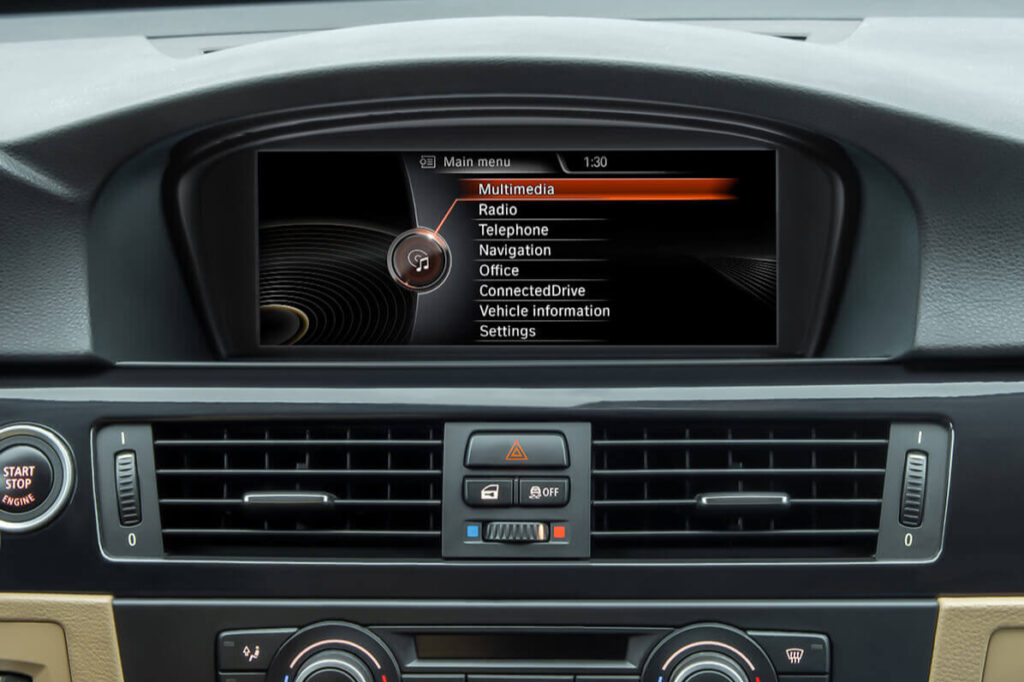
The CIC (Car Information Computer) system
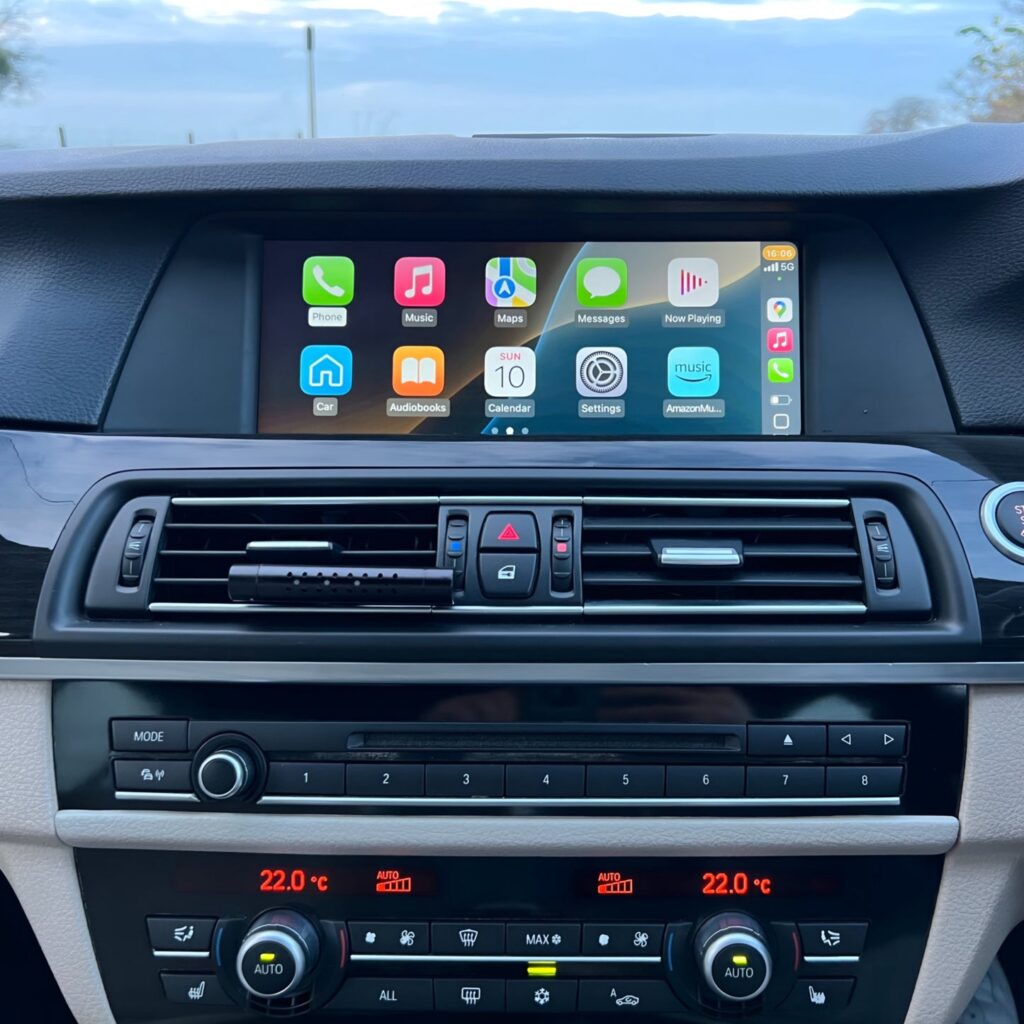
The CIC will gradually replace the CCC from 2008. It equips restyled E models and the first F Series: E90 LCI, E60 LCI, F10, F01, X1 E84, X3 F25 phase 1.
The CIC introduces a more modern architecture, an internal hard drive and greater computing power. However, Bluetooth A2DP streaming still depends on the presence of a Combox module or specific software configuration.
A CIC without Combox generally only supports Bluetooth telephony. Audio streaming is only activated when the appropriate module is present.
The Combox module
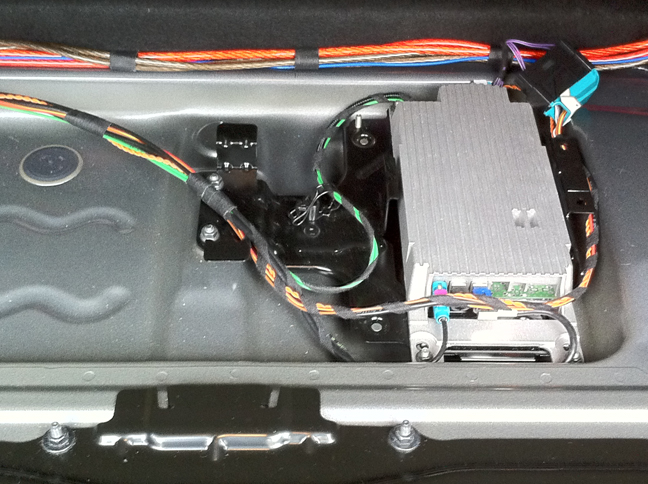
The Combox appeared around 2010, and represented a major turning point. It merges the functions of the MULF and the TCU, and natively integrates :
- Bluetooth HFP (telephony)
- Bluetooth A2DP (audio streaming)
- USB audio
- Advanced smartphone integration
Combox is essential for OEM Bluetooth streaming on first-generation CICs (e.g. F10 2010 without Combox = no A2DP).
The NBT system
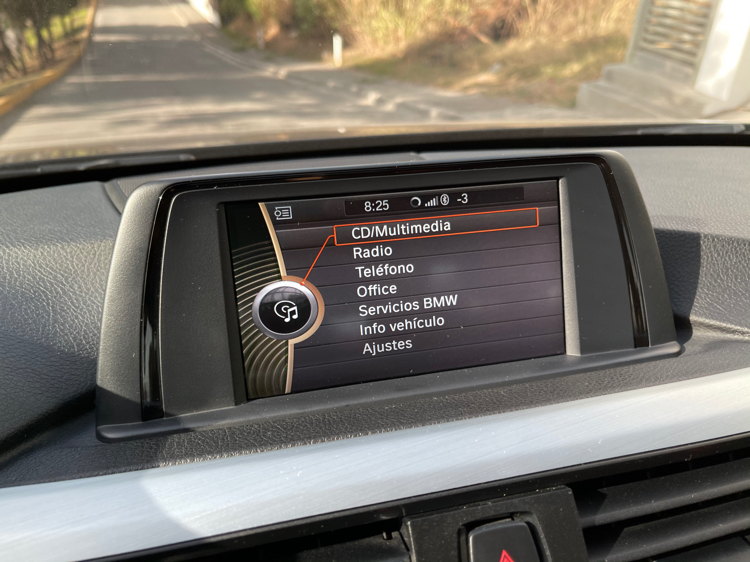
The NBT appears from 2012-2013 on the F Series (F30, F10 LCI, F15, F26...). It directly integrates advanced Bluetooth management without relying on a separate external module for streaming.
In most cases, the NBT supports A2DP natively, except in very specific configurations.
Role of the MULF module
The MULF (Multi Functional Logic Unit) is a separate module initially responsible for Bluetooth and sometimes USB. On CCC architectures and some CICs, it manages HFP exclusively.
There are several generations of MULF. Early versions do not support audio streaming. Simply having a MULF does not guarantee the presence of A2DP.
The MOST network (fiber optics)
BMW uses the MOST bus to connect multimedia components: head unit, amplifier, Bluetooth module, CD changer, etc.
MOST is a fiber-optic loop. Each module is chained together. If a module is missing or faulty, the loop can be broken, causing audio malfunctions.
High-end Bluetooth adapters can integrate directly into this MOST loop, simulating a CD changer to inject a clean digital audio stream.
A2DP protocol: how it works
A2DP (Advanced Audio Distribution Profile) is the Bluetooth profile for stereo audio transmission.
It is essential to distinguish between :
- HFP (Hands-Free Profile): used for calls, reduced bandwidth, mono.
- A2DP: used for music, stereo, wider bandwidth.
A BMW can perfectly well have HFP without A2DP support. This depends on the hardware module installed and the firmware.
Audio codecs
The standard A2DP codec is SBC (Subband Codec). Some more modern implementations support AAC. BMW systems from the CCC/CIC era generally use SBC.
Recent Bluetooth adapters can handle AAC, but the final quality will always depend on the audio input (analog AUX or digital MOST).
Bluetooth versions
Here is a technical summary of the major releases:
Bluetooth 1.0: unstable, obsolete
Bluetooth 2.0: Enhanced Data Rate (EDR), widely used in automobiles
Bluetooth 3.0: High Speed via auxiliary Wi-Fi (not relevant for audio)
Bluetooth 4.0: introduction of BLE (Bluetooth Low Energy)
Bluetooth 5.0: longer range, higher data rate
Bluetooth 5.1: improved geolocation
Bluetooth 5.2: LE Audio management
Bluetooth 5.3: stability optimizations
Bluetooth 5.4: industrial IoT enhancements
It is essential to specify that 7.0 does not officially exist for car audio adapters. The “Bluetooth 7.0” ads found on certain platforms are purely marketing. It's a marketing scam designed to suggest a non-existent superiority.
For car audio streaming, the Bluetooth version is less important than :
- Connection stability
- The codec used
- DAC quality (if analog output)
- Integration into the BMW
Bluetooth adapters for BMW
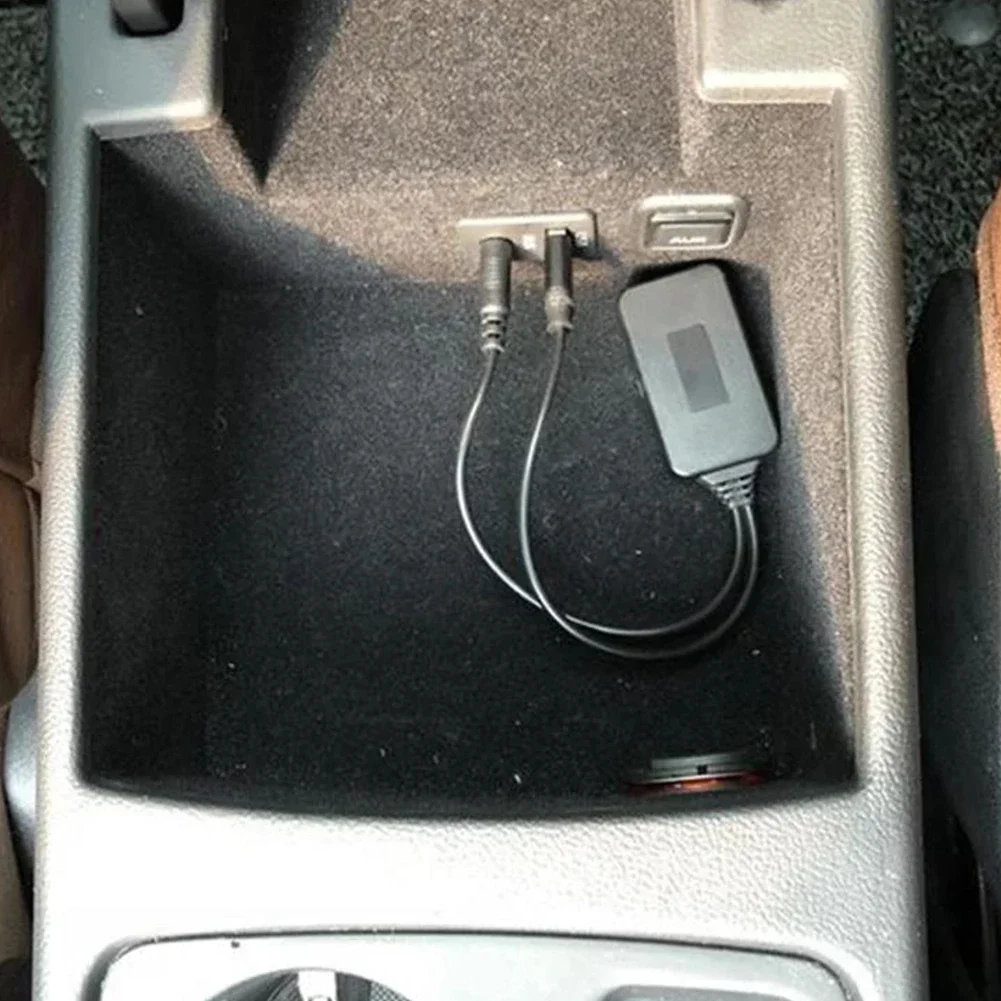
Single AUX adapter
Connection via 3.5 mm jack plug.
Advantages :
Simple installation
Low cost
Wide compatible
USB adapter
Works only if the BMW USB port supports external audio. On many CICs without Combox, USB does not support Bluetooth streaming.
MOST fiber optic modules
They integrate into the fiber optic loop and simulate a CD changer.
Major benefit: direct digital audio, better sound quality.
More complex installation.
Retrofit Combox OEM
The most integrated solution.
Requires wiring, coding, sometimes software updates.
Total OEM quality.
Chassis compatibility (Bluetooth adapter via AUX)
Series 1
E81, E82, E87, E88: compatible if AUX option present
F20/F21: generally natively compatible via CIC/NBT
Series 3
E46 (after 2003 with AUX)
E90/E91/E92/E93: AUX compatible, OEM streaming only with Combox
F30: A2DP generally native
Series 5
E39: AUX must be added
E60/E61: AUX compatible, A2DP via retrofit
F10/F11: 2010 without Combox = no A2DP
Series 6
E63/E64: similar logic to E60
F12/F13: NBT, native streaming
Series 7
F01/F02: Combox presence-dependent
X Series
X1 E84 : depends on CIC + Combox
X3 E83 : AUX addition required
X3 F25 pre-LCI: often without A2DP
X5 E53: mandatory retrofit
X5 E70: CIC generation dependent
X6 E71: similar to E70
Z4
E85/E86: AUX retrofit required
E89 : CIC depends on Combox
Special technical cases
E46 before 2003: no original AUX input
F10 2010 without Combox: telephony yes, music no
X3 F25 pre LCI: often HFP only
Technical conclusion
A Bluetooth AUX adapter is relevant when :
- The vehicle has an AUX
- The owner wants a simple solution
- Full OEM integration not a priority
A Combox retrofit is preferable when :
- The vehicle is equipped with CIC
- Owner wants full iDrive integration
- OEM quality and ergonomics are top priorities
It is essential to preserve the integrity of the original BMW system. The CCC, CIC and NBT architectures are designed around the MOST network and a precise modular logic. Any modification must respect this architecture to avoid instabilities and audio losses.
 Français
 English
 Español